
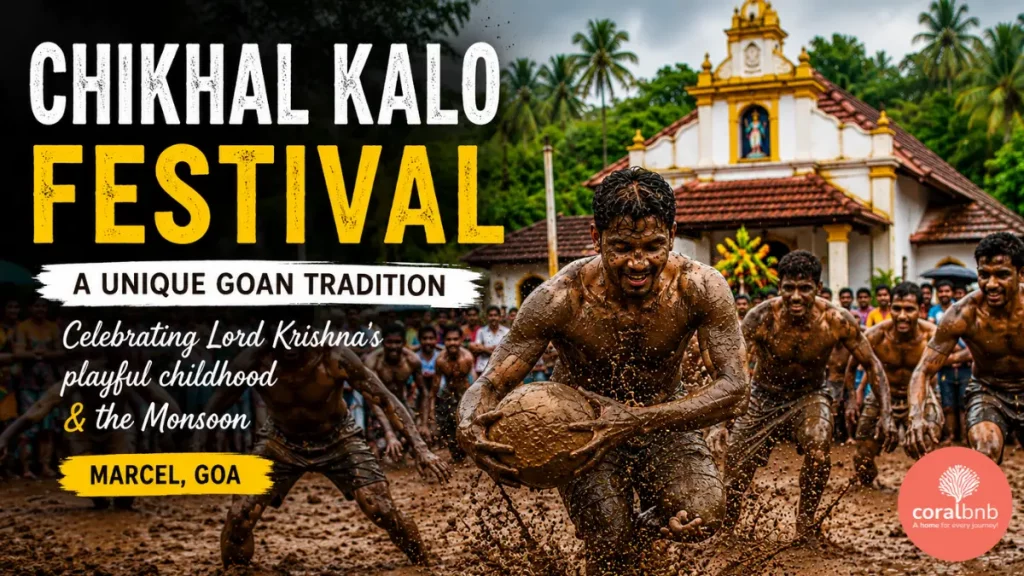
When people think of Goa, beaches and nightlife usually come to mind. But if you’re visiting during the monsoon, there’s a unique festival that most tourists don’t know about – the Chikhal Kalo Festival.
Held in the charming village of Marcel, this centuries-old celebration brings together faith, tradition, and a whole lot of fun. Picture hundreds of people playing traditional games in the mud while celebrating the playful spirit of Lord Krishna.
If you’re looking to experience the real Goa beyond the beaches, I highly recommend adding this festival to your itinerary. It’s one of the most memorable cultural experiences you can have during the monsoon.
What is the Chikhal Kalo Festival?
The Chikhal Kalo Festival is one of Goa’s oldest and most unique cultural celebrations. The name literally means “playing in the mud,” and that’s the heart of this joyful festival.
Every year, devotees gather at the Shree Devki Krishna Temple in Marcel village to celebrate Lord Krishna’s playful childhood. The temple grounds are transformed into a muddy playground filled with laughter and traditional games.
While the mud games are the biggest attraction, the festival has a much deeper meaning. It celebrates devotion, community spirit, and Goa’s strong connection with agriculture and nature.
For locals, it’s a cherished tradition that has been passed down for generations. For visitors, it’s a chance to witness a side of Goa that goes far beyond its beaches and party scene.
Did You Know?
Chikhal Kalo is celebrated only in Marcel village, making it one of Goa’s most exclusive traditional festivals.
Why is Chikhal Kalo Celebrated?
At first glance, Chikhal Kalo looks like a giant mud party. But there’s much more to this unique celebration than meets the eye.
The festival is inspired by Lord Krishna’s playful childhood, when he would spend time playing games with his friends. The mud-filled celebrations recreate that joyful spirit while bringing the community together.
It also marks the arrival of the monsoon – a season that’s incredibly important for Goa’s farming communities. The festival expresses gratitude for nature, good rainfall, and a prosperous harvest.
Here’s what Chikhal Kalo symbolizes:
- Devotion to Lord Krishna and his playful childhood
- Welcoming the monsoon and the farming season
- Respect for Mother Earth and nature
- Community bonding, where people of all ages celebrate together
- Finding joy in simple traditions that have been preserved for generations
Local Tip: Don’t think of Chikhal Kalo as just a mud festival. It’s one of the best places to experience Goa’s traditions, village life, and warm community spirit.
Where is the Chikhal Kalo Festival Celebrated?
The Chikhal Kalo Festival is celebrated at the Shri Devki Krishna Saunsthan in Marcel, a peaceful village in Ponda Taluka, Goa. Surrounded by lush greenery, the village provides the perfect backdrop for this vibrant monsoon celebration.
What makes this festival even more special is its location. The temple is one of the few places in India dedicated to Lord Krishna and his mother, Devki, making it a significant pilgrimage site for devotees.
Despite its growing popularity, Marcel has retained its old-world charm. During the festival, the quiet village comes alive with devotional music, traditional games, and visitors from across Goa and beyond.
Local Tip: I’d suggest arriving early in the morning before the crowds gather. You’ll have enough time to explore the temple, soak in the festive atmosphere, and find a great spot to watch the famous mud games unfold.
When is Chikhal Kalo Festival Celebrated?
The Chikhal Kalo Festival is celebrated every year during the Hindu month of Ashadh, usually in July. In 2026, the celebrations will take place from 24th to 26th July at the Shree Devki Krishna Temple in Marcel village.
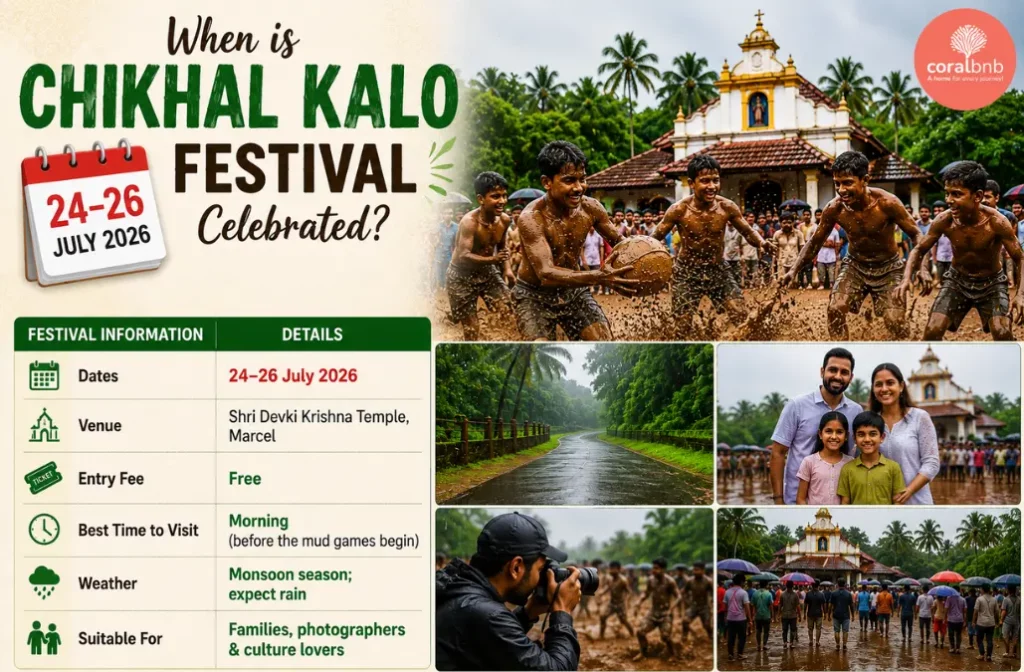
The festival coincides with the monsoon season, when Goa is at its greenest. The rains add to the charm of the celebrations, creating the perfect setting for the iconic mud games.
Local Tip: If you’re visiting Goa in late July, don’t plan just a day trip. Spend a weekend exploring nearby attractions like Divar Island, spice plantations, and Old Goa to make the most of your monsoon getaway.
What Happens During the Chikhal Kalo Festival?
The Chikhal Kalo Festival is much more than people playing in the mud. From temple rituals to traditional village games, every part of the celebration reflects Goa’s rich culture and community spirit.
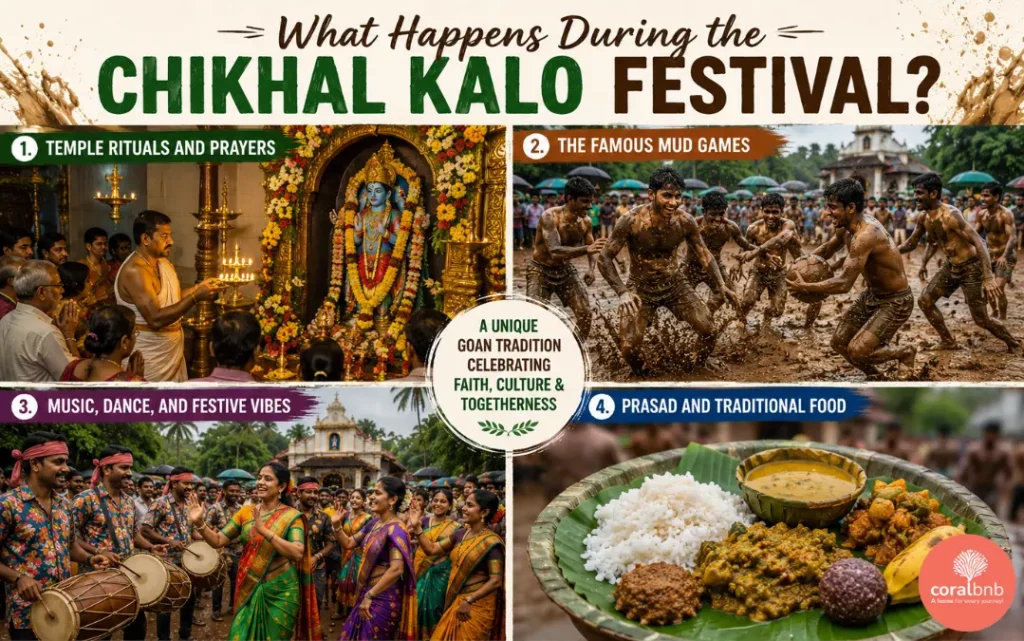
Here’s what you can expect if you’re attending for the first time.
1. Temple Rituals and Prayers
The celebrations begin with special prayers at the Shree Devki Krishna Temple. Devotees gather early in the morning to seek blessings before the festivities begin.
The atmosphere is peaceful, with devotional songs, rituals, and a strong sense of faith filling the temple premises.
Highlights include:
- Morning prayers and puja
- Devotional bhajans and chants
- Blessings from the temple priests
- A vibrant spiritual atmosphere
2. The Famous Mud Games
Once the rituals are over, the temple grounds transform into a giant muddy playground. This is the most exciting part of the festival and the moment everyone waits for.
Children, adults, and even elders enthusiastically participate in traditional games, creating a joyful and energetic atmosphere.
Popular games played during the festival include:
- Chendu Fali (traditional ball game)
- Gilli Danda
- Friendly wrestling
- Tug of War
- Relay races
- Other traditional village games
Don’t be surprised if you see spectators cheering just as loudly as the participants!
3. Music, Dance, and Festive Vibes
The celebrations aren’t limited to the mud games. Throughout the day, the festival comes alive with music, laughter, and cultural performances.
You’ll hear traditional Goan folk music, devotional songs, and the cheerful sounds of people celebrating together.
The festive atmosphere includes:
- Traditional folk music
- Devotional singing
- Community celebrations
- A lively and family-friendly environment
It’s the kind of celebration where you’ll find yourself smiling even if you’re just watching from the sidelines.
4. Prasad and Traditional Food
No Goan festival is complete without delicious food. After the celebrations, devotees gather to enjoy prasad and simple traditional meals prepared by the local community.
The food reflects Goa’s hospitality and the spirit of sharing that makes festivals like Chikhal Kalo so special.
Why Do People Play in the Mud During Chikhal Kalo Festival?
This is probably the first question every visitor asks – and the answer goes far beyond having fun.
Playing in the mud represents Lord Krishna’s playful childhood, when he enjoyed spending time outdoors with his friends. The festival recreates those joyful moments in a meaningful way.
The mud also symbolizes the arrival of the monsoon, which brings new life to Goa’s farms and villages. For farming communities, it’s a celebration of rain, fertility, and a hopeful harvest.
The mud represents:
- Lord Krishna’s playful nature
- The arrival of the monsoon
- A connection with Mother Earth
- Gratitude for a good farming season
- Unity and togetherness within the community
Local Insight: One of the best things about Chikhal Kalo is that everyone is equal in the mud. Whether you’re a local, a visitor, young, or old, the festival brings people together in the simplest and happiest way.
Why You Should Experience Chikhal Kalo at Least Once?
There are plenty of festivals in Goa, but Chikhal Kalo offers something truly different. It lets you experience the state’s traditions in a way that’s fun, meaningful, and welcoming.
Whether you’re travelling with family, friends, or solo, the festival gives you a chance to see a side of Goa that many visitors miss.
Here’s why it’s worth adding to your itinerary:
- Experience Goa beyond its beaches.
- Witness a centuries-old cultural tradition.
- Capture incredible monsoon photographs.
- Interact with friendly locals.
- Enjoy one of Goa’s most unique monsoon festivals.
- Create memories you’ll talk about long after your trip.
If you’re someone who enjoys authentic travel experiences, Chikhal Kalo is one event you’ll be glad you didn’t miss.
Can Tourists Participate in Chikhal Kalo Festival?
Yes! One of the reasons I recommend this festival is because visitors are welcome to experience the celebrations.
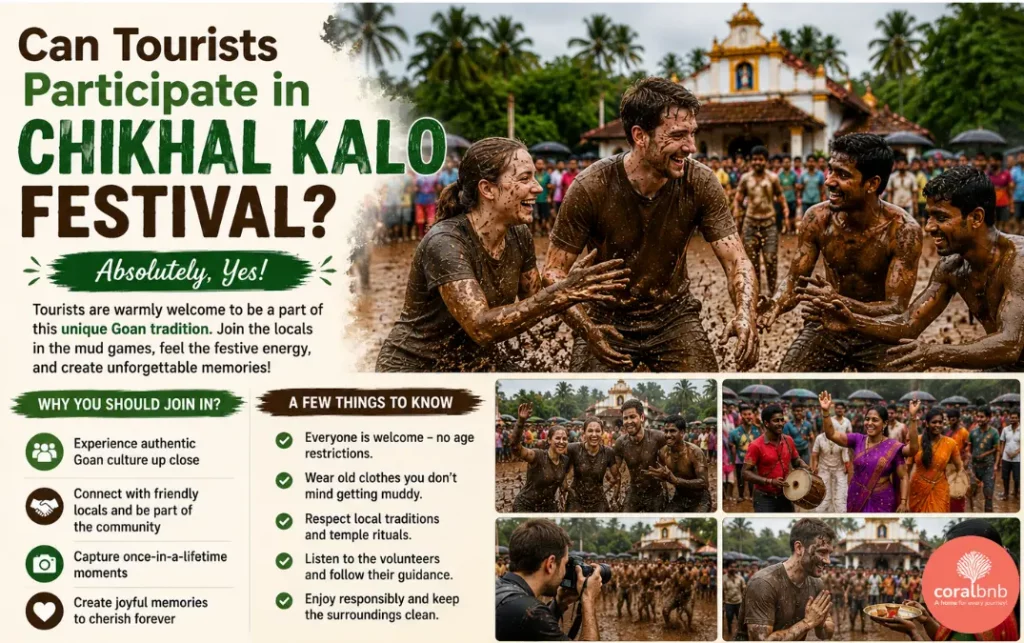
If you’d like to join the mud games, make sure you do so respectfully and follow any instructions given by the organizers or locals.
A few simple tips:
- Wear clothes you don’t mind getting muddy.
- Ask before joining any activity.
- Respect the temple rituals and local traditions.
- Keep the festival grounds clean.
- Be mindful while taking photographs, especially during prayers.
- Even if you don’t step into the mud, simply watching the celebrations is an unforgettable experience.
Local Tip: If you’re into photography, this is one of the most authentic festivals to capture in Goa. The best photos are usually taken during the mud games when everyone is fully immersed in the celebrations.
How to Reach Marcel Village for Chikhal Kalo Festival?
The festival takes place at the Shree Devki Krishna Temple in Marcel village, located in North Goa. The village is well connected by road, making it easy to reach from different parts of the state.
By Air
The nearest airport is Manohar International Airport (Mopa) and Goa International Airport (Dabolim). From either airport, you can hire a taxi or rent a self-drive vehicle to reach Marcel.
By Train
The nearest major railway stations are Karmali, Madgaon, and Thivim. Taxis and local transport are available outside all major stations.
By Road
Driving is one of the easiest ways to reach the festival. You can travel by self-drive car, scooter or bike rental, taxi, local buses connecting Panaji, Ponda, and nearby villages
Local Tip: If you’re driving during the monsoon, leave a little earlier than planned. The scenic roads are beautiful, but rain can slow down traffic.
Tips for Visiting the Chikhal Kalo Festival
Planning to attend the Chikhal Kalo Festival for the first time? A little preparation can make your experience much more enjoyable.
Since you’ll be visiting during the monsoon and around a muddy festival ground, it’s best to come prepared.
Here’s what I’d recommend:
- Wear old, comfortable clothes that you don’t mind getting muddy.
- Choose sandals or waterproof footwear with a good grip.
- Carry a change of clothes and a small towel.
- Keep your phone and valuables in a waterproof pouch.
- Pack a light raincoat or umbrella, as rain showers are common.
- Stay hydrated, especially if you’re participating in the games.
- Dress modestly while visiting the temple.
- Help keep the surroundings clean by avoiding littering.
Local Tip: Reach at least an hour before the celebrations begin. You’ll find parking more easily, avoid the rush, and get a good spot to watch the festivities.
Conclusion
The Chikhal Kalo Festival is proof that Goa has so much more to offer than beaches and nightlife. It’s a celebration where faith, tradition, and community come together in the most joyful way.
Whether you’re watching the mud games, exploring the temple, or simply soaking in the festive atmosphere, you’ll leave with memories that are completely different from a typical Goa holiday.
If you’re planning a Goa monsoon trip, I’d definitely recommend timing your visit around Chikhal Kalo. It’s one of those experiences that lets you discover the heart of Goa and its rich cultural heritage.
FAQs
1. Is the Chikhal Kalo Festival free to attend?
Yes, visitors can usually attend the festival free of charge. However, it’s always a good idea to check for any official announcements before your visit.
2. What should I wear to the Chikhal Kalo Festival?
Wear comfortable clothes that you don’t mind getting muddy. Waterproof footwear, a change of clothes, and a towel are also recommended if you plan to participate.
3. Can children attend the Chikhal Kalo Festival?
Yes. The festival is family-friendly, and many local families attend with children. Parents should supervise young kids, especially around the muddy play area.
4. Is photography allowed during the festival?
Yes, photography is generally allowed. However, be respectful while taking photos inside the temple and avoid disturbing devotees during prayers.
5. How much time should I plan for the festival?
You can comfortably spend 3 – 4 hours exploring the temple, watching the traditional games, enjoying the festive atmosphere, and interacting with locals.
6. Is parking available near the festival venue?
Yes, parking is usually available near the temple, but it can fill up quickly during the festival. Arriving early is the best way to avoid congestion.
7. Can I visit the Shri Devki Krishna Temple on other days?
Yes. The temple is open to devotees throughout the year and is worth visiting even if you’re not in Goa during the Chikhal Kalo Festival.
8. What makes the Chikhal Kalo Festival unique?
Unlike most festivals, Chikhal Kalo combines temple rituals with traditional mud games inspired by Lord Krishna’s childhood. It also celebrates Goa’s farming traditions and community spirit, making it a one-of-a-kind cultural experience.
9. Is the Chikhal Kalo Festival suitable for international tourists?
Absolutely. The festival welcomes visitors from around the world who are interested in experiencing Goa’s authentic culture and traditions. Respecting local customs will help you enjoy the celebration even more.