
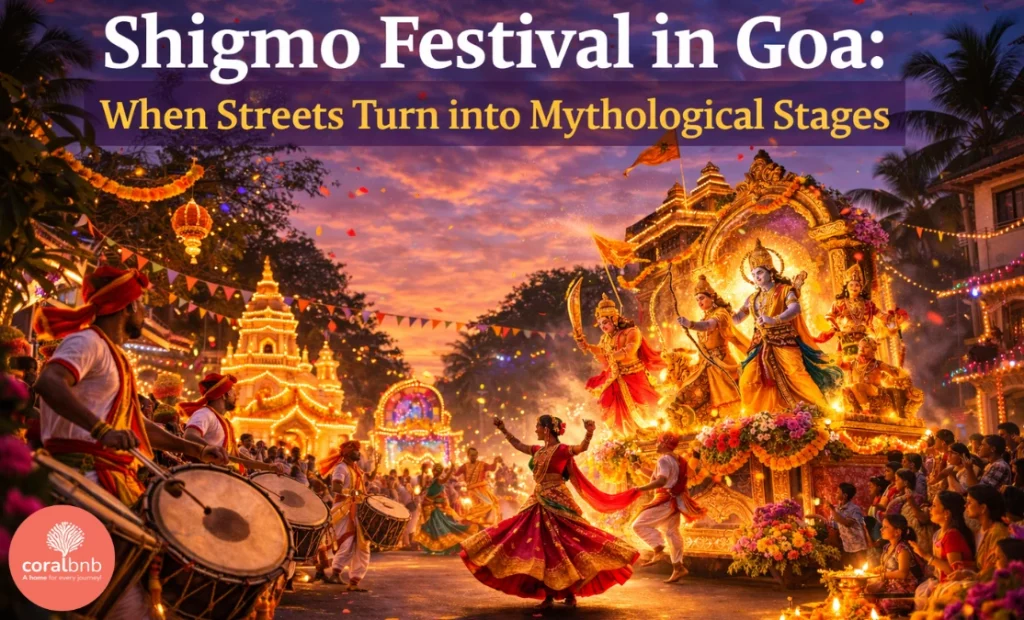
If you want to see Goa beyond tourism – see it during Shigmo, when entire towns pulse with drumbeats, glowing floats roll through crowded streets, and age-old traditions take center stage.
For two weeks every spring, Goa shifts into celebration mode – not the commercial kind, but something far more rooted. Families gather along parade routes, performers prepare in elaborate traditional attire, and mythology unfolds in moving, illuminated tableaux.
This is not just a festival you watch. It’s one you feel – in the rhythm, the community pride, and the unmistakable energy that fills the air.
What is Shigmo Festival?
Shigmo is Goa’s biggest Hindu spring festival, celebrated with grand parades, traditional folk dances, music, and vibrant processions.
The word “Shigmo” is derived from the Sanskrit word Sugrishmaka, meaning the arrival of summer. Traditionally, it marks the end of the harvest season and the beginning of spring – a time of renewal and joy for farming communities.
Unlike Holi celebrations in North India, Shigmo in Goa is more about cultural expression and mythology rather than just playing with colors. It’s deeply rooted in tradition and community participation.
And that cultural depth is what makes it so special.
History & Cultural Significance of Shigmo
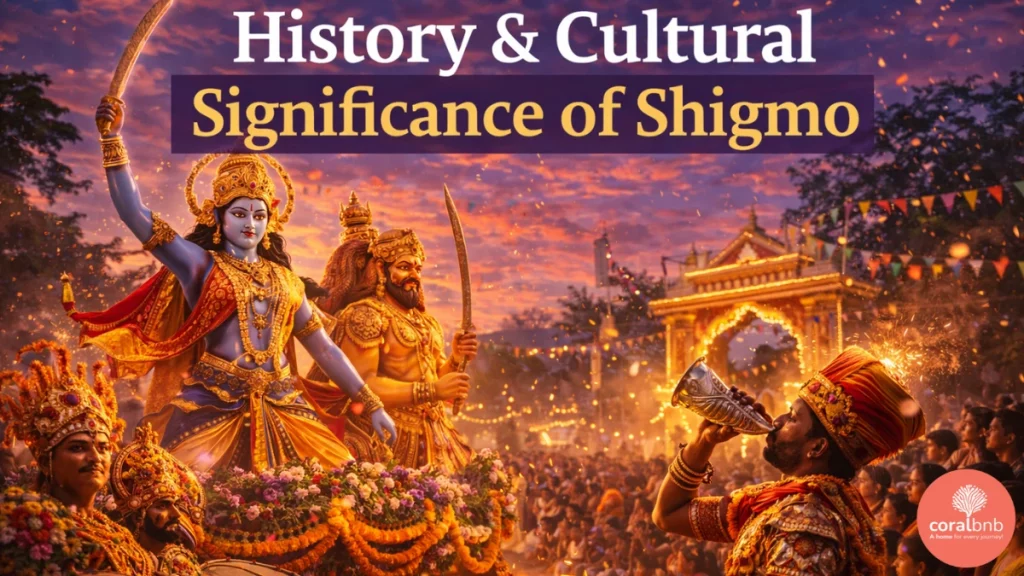
To understand Shigmo, you have to look at its roots in Goa’s agrarian past. The festival is believed to have begun as a homecoming celebration for farmers returning to their villages after months of working away. It marked the end of the harvest season and the joy of reunion, gratitude, and renewal.
Over time, Shigmo evolved into a larger cultural and religious celebration. It came to symbolize the victory of good over evil, the arrival of spring, and the preservation of Hindu traditions in Goa. Many parade floats recreate powerful scenes from the Ramayana and the Mahabharata, turning the streets into moving stages of mythology.
The festival also reflects Goa’s warrior spirit, with traditional performances that honour courage and heritage. More than just a seasonal event, Shigmo continues to serve as a living expression of community pride and cultural continuity.
When is Shigmo Celebrated?
Shigmo is typically celebrated in March, aligning with the full moon of the Hindu month of Phalguna. As a spring festival, it marks the transition from winter to warmer days and coincides with the end of the harvest season. The celebrations usually extend for around two weeks, with different towns and villages hosting events on different dates.
There are two distinct forms of Shigmo, each offering a unique experience:
- Dhakto Shigmo (Small Shigmo) – Observed mainly in rural villages, this version focuses on temple rituals, traditional folk dances, and community gatherings. It retains a more devotional and intimate atmosphere.
- Vhadlo Shigmo (Big Shigmo) – The larger, state-supported celebrations held in major towns feature elaborate float parades, cultural troupes, dramatic lighting, and large public participation.
While village celebrations feel traditional and close-knit, the town parades are grand and theatrical – giving visitors multiple ways to experience the festival.
And that naturally leads to the next question: where can you witness the most spectacular Shigmo celebrations in Goa?
Where is Shigmo Celebrated in Goa?
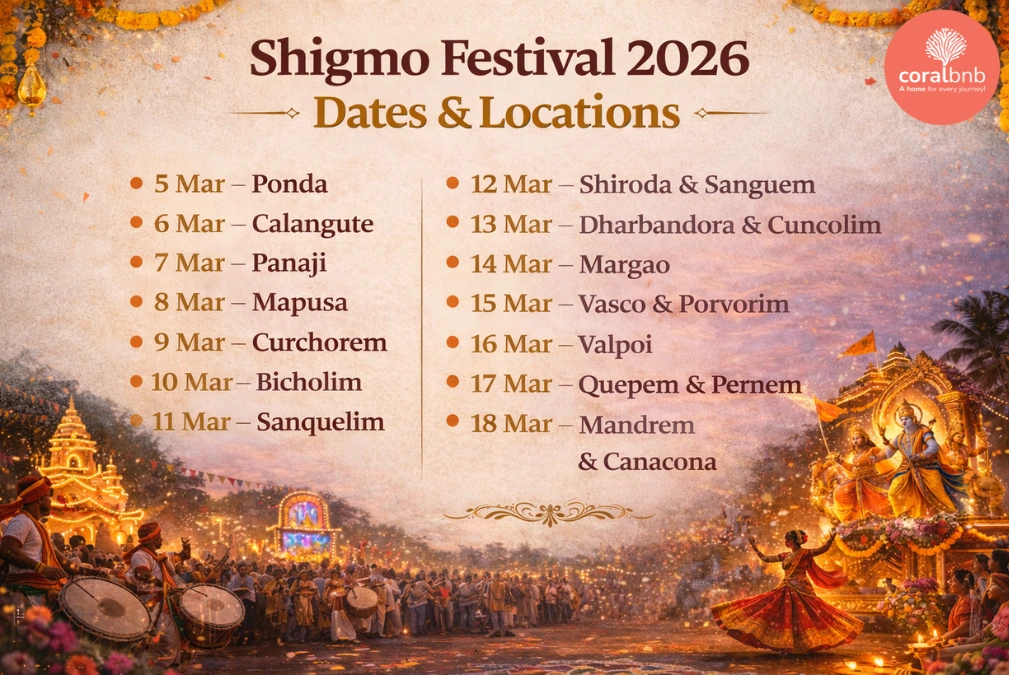
Goa Tourism has officially announced that Shigmo Festival 2026 will be celebrated across the state from 5 March to 18 March 2026, turning Goa into a lively stage of cultural parades, folk performances and mythological tableaux.
Unlike a single-day event, Shigmo unfolds over two weeks, with celebrations scheduled in different towns each day – making it possible for visitors to experience unique parades and performances across multiple locations if they travel during the festival period.
Here’s how the 2026 Shigmo schedule typically plays out (dates may vary slightly city to city):
- 5 Mar – Ponda
- 6 Mar – Calangute
- 7 Mar – Panaji
- 8 Mar – Mapusa
- 9 Mar – Curchorem
- 10 Mar – Bicholim
- 11 Mar – Sanquelim
- 12 Mar – Shiroda & Sanguem
- 13 Mar – Dharbandora & Cuncolim
- 14 Mar – Margao
- 15 Mar – Vasco & Porvorim
- 16 Mar – Valpoi
- 17 Mar – Quepem & Pernem
- 18 Mar – Mandrem & Canacona (festival finale)
Most parades kick off in the late afternoon (around 4 pm) and continue into the evening, with vibrant lighting, music and performances filling the streets.
This rotating schedule gives festival-goers flexibility to plan their goa itinerary around the locations they most want to experience – whether that’s the bustling capital or traditional village celebrations.
Tip: Planning ahead helps – local transport and guesthouses can fill up quickly during Shigmo dates, especially in towns known for big parade crowds like Panaji and Margao.
Highlights of Shigmo Festival
Let’s talk about what truly makes Shigmo unforgettable. It’s not just one element – it’s the combination of storytelling, performance, rhythm, and community energy that creates a powerful experience.
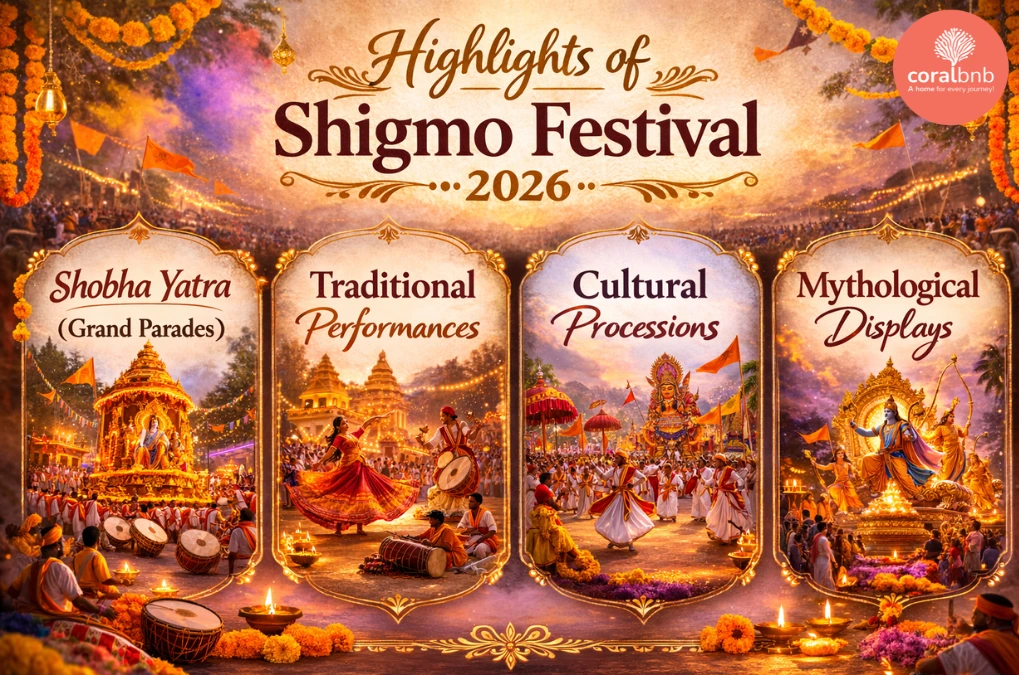
Shobha Yatra (Grand Parades)
The highlight of Shigmo is the Shobha Yatra, or ceremonial parade, organized across major Goan cities. These parades feature large, beautifully designed thematic floats that move through the streets accompanied by performers, musicians, and cultural troupes. Each float tells a story – often inspired by mythology, folklore, or historical events – making the procession both entertaining and meaningful.
The streets are lined with spectators as the illuminated floats, rhythmic drumbeats, and costumed performers create a spectacular visual display.
Traditional Performances
Shigmo proudly showcases Goa’s rich folk traditions through performances by local troupes. Popular dances include:
- Ghode Modni – A warrior-style dance symbolizing bravery and martial heritage.
- Goff – A vibrant ribbon dance representing unity and coordination.
- Tonyamel – A festive group performance that combines music, rhythm, and dramatic presentation.
These dances are performed in traditional attire, accompanied by energetic beats that add momentum to the parade.
Cultural Processions – Romtamel
One of the most dynamic elements of Shigmo is the Romtamel procession. It brings together groups of dancers and musicians who move rhythmically through the streets playing traditional instruments such as the dhol and tasha. The synchronized beats create a powerful atmosphere, drawing crowds into the celebratory spirit.
Mythological Displays
Many Shigmo floats and performances depict scenes from Hindu epics like the Ramayana and the Mahabharata. Gods, demons, kings, and warriors are brought to life through detailed costumes and dramatic stage setups, turning the parade into a moving narrative of devotion and heritage.
Rituals and Devotional Elements
Beyond the spectacle, Shigmo retains its religious roots. Rituals such as Naman (prayers offered in reverence) form an important part of the festivities. These devotional practices remind participants that Shigmo is not just a public celebration but also a spiritual observance rooted in gratitude and faith.
Together, these elements make Shigmo a festival that balances celebration with tradition – spectacle with sincerity.
What to Expect at a Shigmo Parade?
If it’s your first time attending a Shigmo parade, expect an evening filled with energy, color, and constant movement.
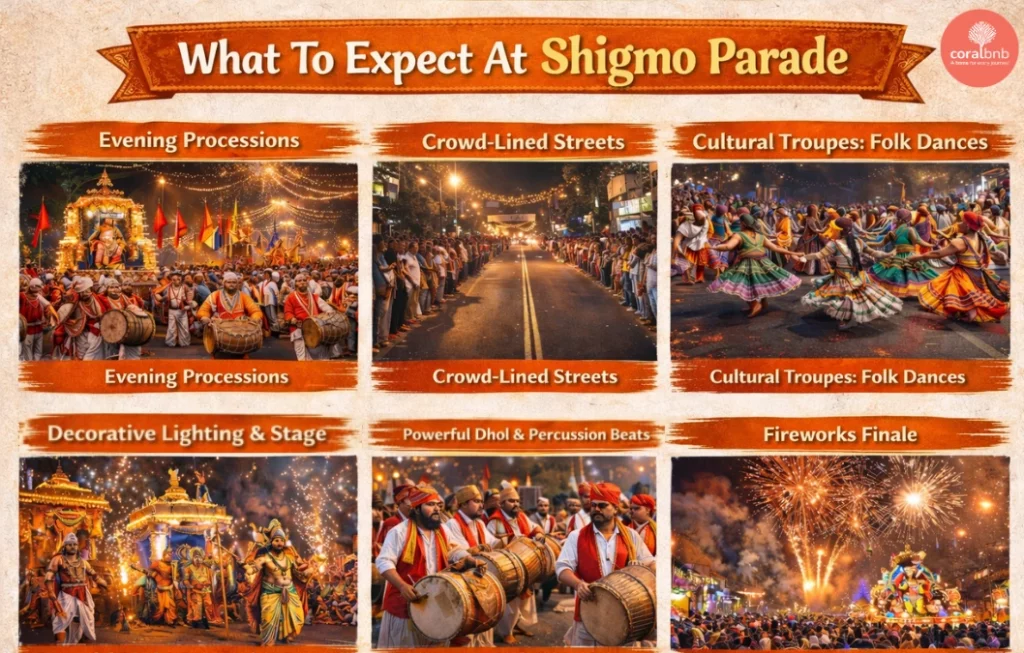
Most parades begin in the late afternoon and gather momentum after sunset. As darkness sets in, the illuminated floats stand out dramatically against the night sky, making the entire procession feel theatrical and larger than life.
Here’s what you’ll typically experience:
- Evening Processions – The celebrations usually take place after sunset, when decorative lighting enhances the beauty of the floats and performances.
- Cultural Troupes from Different Villages – Performers travel from across Goa to participate, showcasing regional dance styles and traditional attire.
- Powerful Dhol & Percussion Beats – The steady rhythm of drums like dhol and tasha fills the air, creating an atmosphere you can feel in your chest.
- Decorative Lighting & Stage Effects – Many floats are beautifully lit, adding a dramatic visual element to mythological scenes.
The overall mood is lively yet family-friendly. Children watch in awe, elders observe proudly, and visitors find themselves swept into the rhythm of the celebration.
Shigmo vs Holi – What Makes It Different?
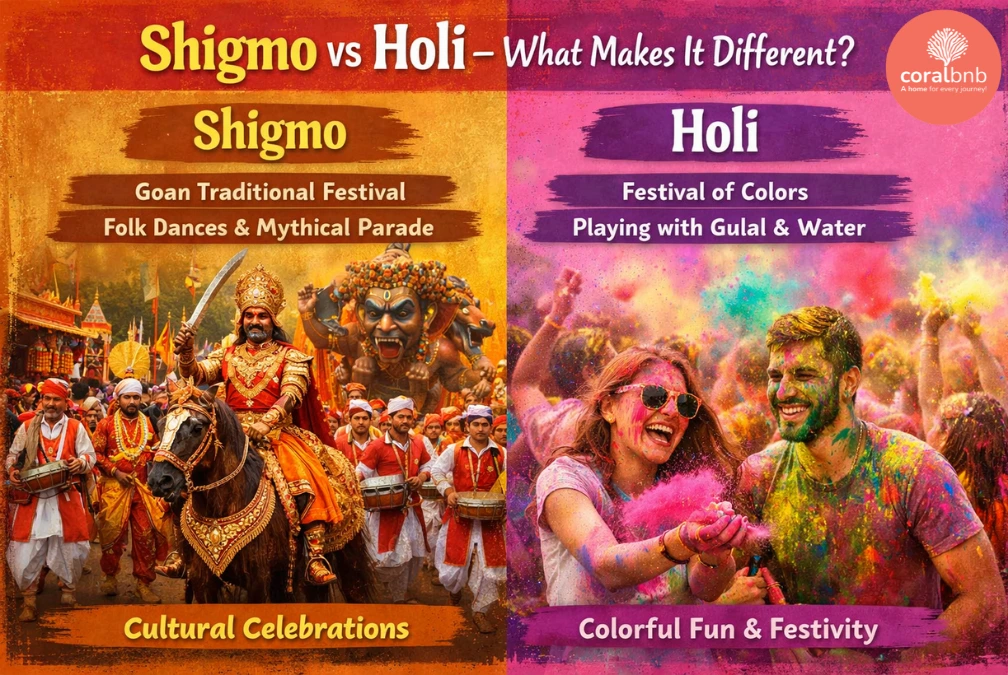
Many travelers assume Shigmo is Goa’s version of Holi – mainly because both are celebrated around the same time in March. However, the two festivals differ significantly in purpose, format, and cultural expression.
While Holi is widely known as the festival of colors celebrated across India, Shigmo is deeply rooted in Goa’s regional traditions and focuses more on cultural storytelling than color play.
Here’s how they differ:
| Shigmo | Holi |
| Features grand cultural and mythological parades | Primarily centered around playing with colors |
| Deeply rooted in Goan agrarian and temple traditions | Celebrated across India in various forms |
| Showcases organized community performances and folk dances | Informal gatherings focused on social celebration |
| Includes government-supported thematic floats | Typically community-led, without structured parades |
In short, while Holi celebrates joy through color, Shigmo celebrates culture through performance.
Why You Should Experience Shigmo at Least Once?
Shigmo offers something that typical vacations often miss – a genuine connection with Goa’s cultural heartbeat. Beyond sightseeing, it allows you to witness traditions that have been preserved and performed for generations.
Here’s why it’s worth planning your trip around:
- Family-Friendly Atmosphere – The parades are vibrant yet wholesome, making them enjoyable for visitors of all ages.
- Culturally Rich Experience – From mythological floats to traditional folk dances, every element reflects Goa’s heritage.
- Visually Spectacular – The illuminated floats, colorful costumes, and rhythmic performances make it a photographer’s delight.
- Less Commercial, More Authentic – Compared to large-scale tourist festivals, Shigmo feels rooted in community rather than spectacle.
- A Living Tradition – It’s not staged for visitors; it’s celebrated by locals with pride and devotion.
What truly makes Shigmo special is the sense of unity. Children watch wide-eyed, elders observe with pride, and entire neighborhoods gather along the streets. You don’t just see a festival – you see a community celebrating its identity.
And that experience leaves a lasting impression long after the parade ends.
Where to Stay During Shigmo Festival?
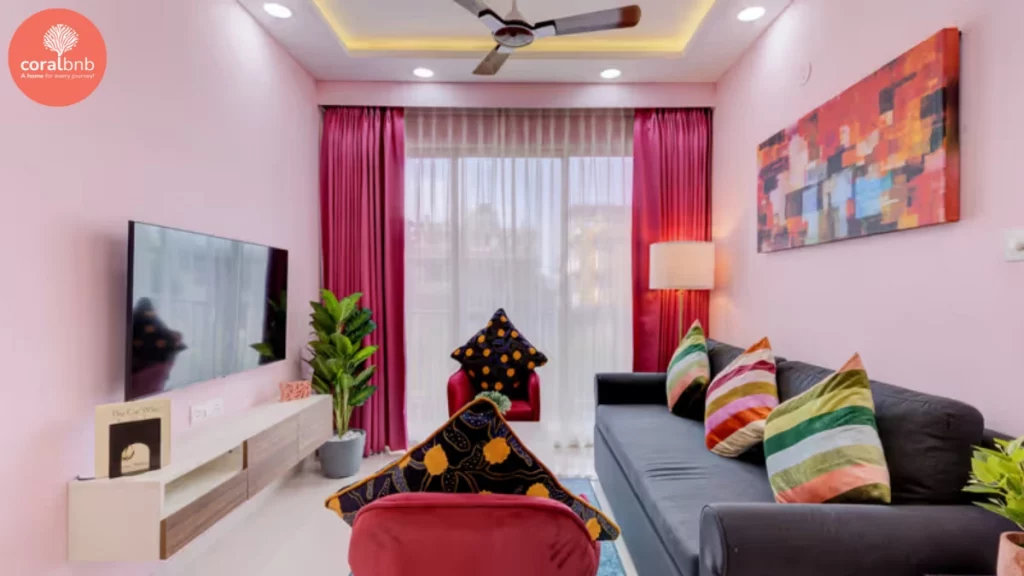
Since most Shigmo parades take place in the evening, staying close to major towns like Margao or Panaji makes your experience far more convenient. You can attend the celebrations comfortably without worrying about long late-night travel back to your accommodation.
For travellers planning to explore South Goa, Coral BNB offers an ideal base during the Shigmo festival. Located within easy reach of Margao’s vibrant parade route, it allows you to experience the cultural energy in the evening while enjoying peaceful beachside mornings.
Instead of staying in crowded city zones, you get the best of both worlds – festive evenings filled with illuminated floats and drumbeats, followed by quiet, comfortable nights in a relaxed setting.
And after hours of music, movement, and celebration, coming back to a calm, cozy space truly completes the Shigmo experience.
Final Thoughts
Shigmo isn’t just another festival on the calendar. It’s Goa in its most authentic form – vibrant, traditional, joyful, and deeply rooted in culture.
If you’re visiting in March, don’t just plan beach days. Check the Shigmo parade dates, pick your town, and immerse yourself in one of Goa’s most colorful cultural celebrations.
Because sometimes, the best way to experience Goa… is beyond the beach.